Why Is My Air Fryer Smoking? UK Fix Checklist for Grease, Overfill and Residue
If you are wondering why is my air fryer smoking uk households usually face, the cause is most often burning fat or leftover grease residue, or airflow blocked by a liner or overcrowding—not a mystery fault. Pause cooking, move the appliance to a clear space, and unplug it if anything feels unsafe, then inspect the basket, chamber and heating-element area before you cook again.
Direct answer: smoke is usually burning fat/residue or blocked airflow — pause, unplug if unsafe, then inspect
Visible smoke during a cook is commonly linked to grease that has collected on the basket, chamber or heating-element area, or to fat rendering too aggressively from fatty foods. Public cleaning guidance notes that grease left on those surfaces can cause smoke and odours on later cooks. UK household advice also ties a sticky grease film to lingering chip smells and smoke in subsequent batches. Airflow matters too: safety commentary warns that foil or baking paper can block vents and may contact the heating element if placed poorly.
Your first move is simple: stop the cycle, allow the unit to cool in a ventilated spot, and unplug if you smell scorching beyond food fat, see damage, or feel unsure. Do not keep running the appliance through persistent smoke.
Triage checklist: excess oil, bacon/fatty foods, dirty element area, liner blocking vents
Work through this checklist before the next batch:
- Excess oil or marinade pooling — oil that drips onto hot surfaces can smoke; tip off pooled liquid from the drawer or plate once cool enough to handle safely.
- Bacon and other fatty foods — fat can smoke if the temperature or crowding is too aggressive; UK bacon timing discussion notes smoke risk when bacon fat runs too hot and advises not exceeding 180°C in that method.
- Dirty basket, chamber or element area — residue from earlier chips or roasted food is a frequent trigger for air fryer smoking grease and leftover odours.
- Liners, foil or paper blocking vents — keep liners from covering air paths; UK safety commentary suggests roughly 10cm clearance around the appliance and avoiding liquids in the chamber, and warns that foil or baking paper can block airflow or touch the element.
Air fryer white smoke is often described with hot fat or residue rather than a clean dry chamber—treat it as a cue to pause and clean, not to push through the cook.
Safe cool-down and clean steps before the next cook
Once the appliance is cool and unplugged:
- Remove the basket or plate and empty crumbs and cooled fat into the bin (not down the sink if grease will set).
- Wash removable parts with warm soapy water as your manual allows; dry thoroughly.
- Wipe accessible chamber walls; follow brand cleaning guidance to address grease on the chamber and heating-element area, which is commonly linked to smoke and odours—never immerse the main body or force metal tools against the element.
- Check that any liner you plan to reuse does not cover vents or sit where it could lift into the element.
These steps help stop air fryer from smoking on the next run when grease film was the cause. Always defer to the manufacturer instructions for your model.
When to stop using the appliance and contact support (burning plastic smell, damaged cord)
Stop using the air fryer and seek support through the retailer’s UK channels (and your manual) if you notice:
- A burning plastic smell that is not normal food odour
- A damaged, frayed or overheating power cord or plug
- Cracks, warping, or parts that no longer sit correctly
- Smoke that returns immediately after a careful cool-down and clean, with no fatty food or liners in play
Do not attempt to diagnose electrical faults yourself. Avoid absolute safety guarantees—follow the product manual and on-site support rather than continuing to cook through unexplained smoke.
Prevention habits for family batch cooking
For busy household batches:
- Clean the basket or plate after greasy cooks rather than stacking residue across several meals.
- Pat very fatty foods dry where sensible, and avoid pouring extra oil into the chamber.
- Cook fatty items in sensible layers so fat can drain without flooding hot surfaces; keep bacon-style cooks within cautious temperature ranges discussed in UK home-cooking guidance.
- Leave space around the unit and keep liners from blocking airflow.
- Between chip batches, wipe visible grease film so later cooks are less likely to smoke.
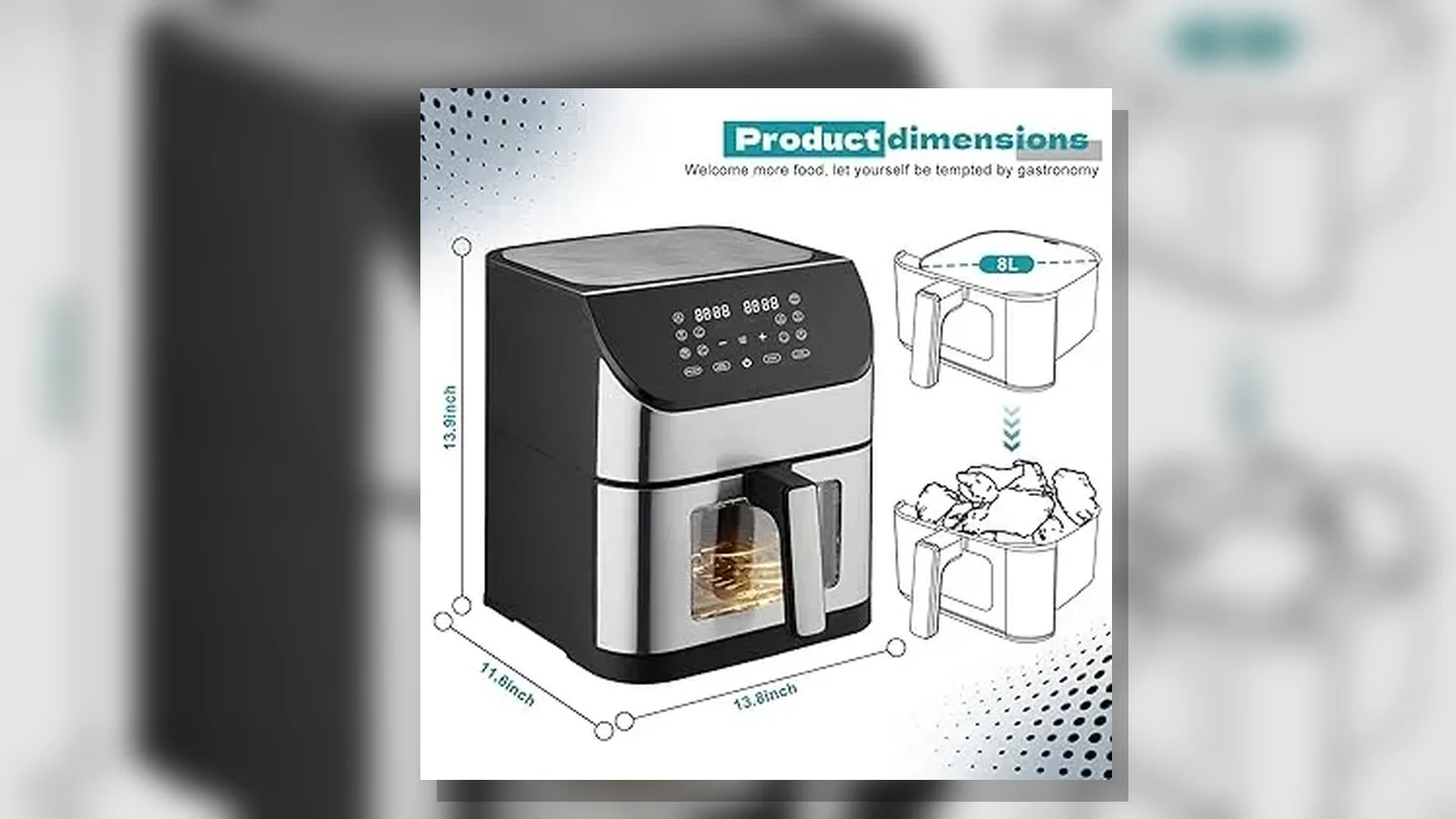
For current product details on the extra-large air fryer page, see current product details for the extra-large air fryer.
FAQ: first-use smells vs true smoke; never ignore persistent smoke
Is a first-use smell the same as smoke?
A light new-appliance smell on early runs can differ from thick smoke caused by burning fat or dirty surfaces. First-use odours should fade with ventilation and normal cleaning; true smoke tied to grease, blocked airflow or fatty cook-offs needs the triage and clean steps above.
Should I ignore persistent smoke?
No. Persistent smoke after cleaning, or smoke with a burning plastic smell or damaged cord, is a signal to stop and contact support—not to keep cooking. No air fryer is immune to smoke when grease, overfill or blocked airflow are present.
Ready to review capacity and care notes for batch cooking? Visit the extra-large air fryer product details for the live product page.